 English
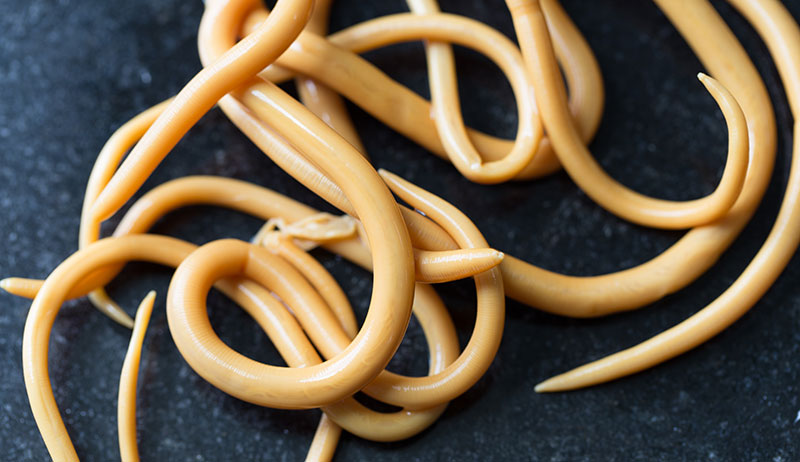
Worms are easy to miss because a bird can be carrying a real burden of roundworms without showing anything as dramatic as blood in the droppings. What you notice instead is slower, quieter: feed conversion gets worse, egg numbers drift down, and birds that should be putting on weight just aren't. By the time you actually spot a worm in the litter, the infestation has usually been building for a while.
The Parasite Behind Most Cases
The large roundworm, Ascaridia galli, is the most common internal parasite in backyard and small commercial flocks. It lives in the small intestine, competes with the bird for nutrients, and in heavy infestations can cause weight loss, diarrhea, and reduced laying. Cecal worms are the other parasite farmers commonly deal with, though they tend to cause milder disease on their own.
Why Piperazine Is Still the Go-To
Piperazine is one of the oldest dewormers used in poultry, and it remains popular because it is inexpensive, works against adult large roundworms, and is simple to dose through drinking water for an entire flock at once. It does not treat every type of worm - tapeworms in particular need a different product - so if you are seeing symptoms that don't improve after a piperazine treatment, that is a sign to look at a broader-spectrum option or get a fecal check done.
Faida Mall stocks Piperazine Citrate in both pack sizes. As with any dewormer, follow the mixing ratio and repeat-treatment interval printed on the pack rather than an amount you saw on a random forum - concentration and flock size both affect the right dose, and overdosing can be harmful to the birds.
Building a Deworming Routine
Most flocks do well on a routine deworming schedule rather than waiting for visible symptoms, since worm eggs can sit in litter and soil for a long time before causing an obvious problem. A common approach is to treat on a fixed interval - many farms work on roughly every four to eight weeks depending on stocking density and how much time the birds spend on bare ground - and to repeat the treatment about a week after the first dose, since a single round doesn't kill worm eggs, only the adult worms already in the gut.
Pair deworming with the same litter hygiene habits that help against coccidiosis: dry bedding, clean waterers, and keeping young and old birds apart where possible. If you're not sure how often your specific setup needs treatment, send us a message on WhatsApp with your flock size and housing type and we'll help you plan a schedule.